

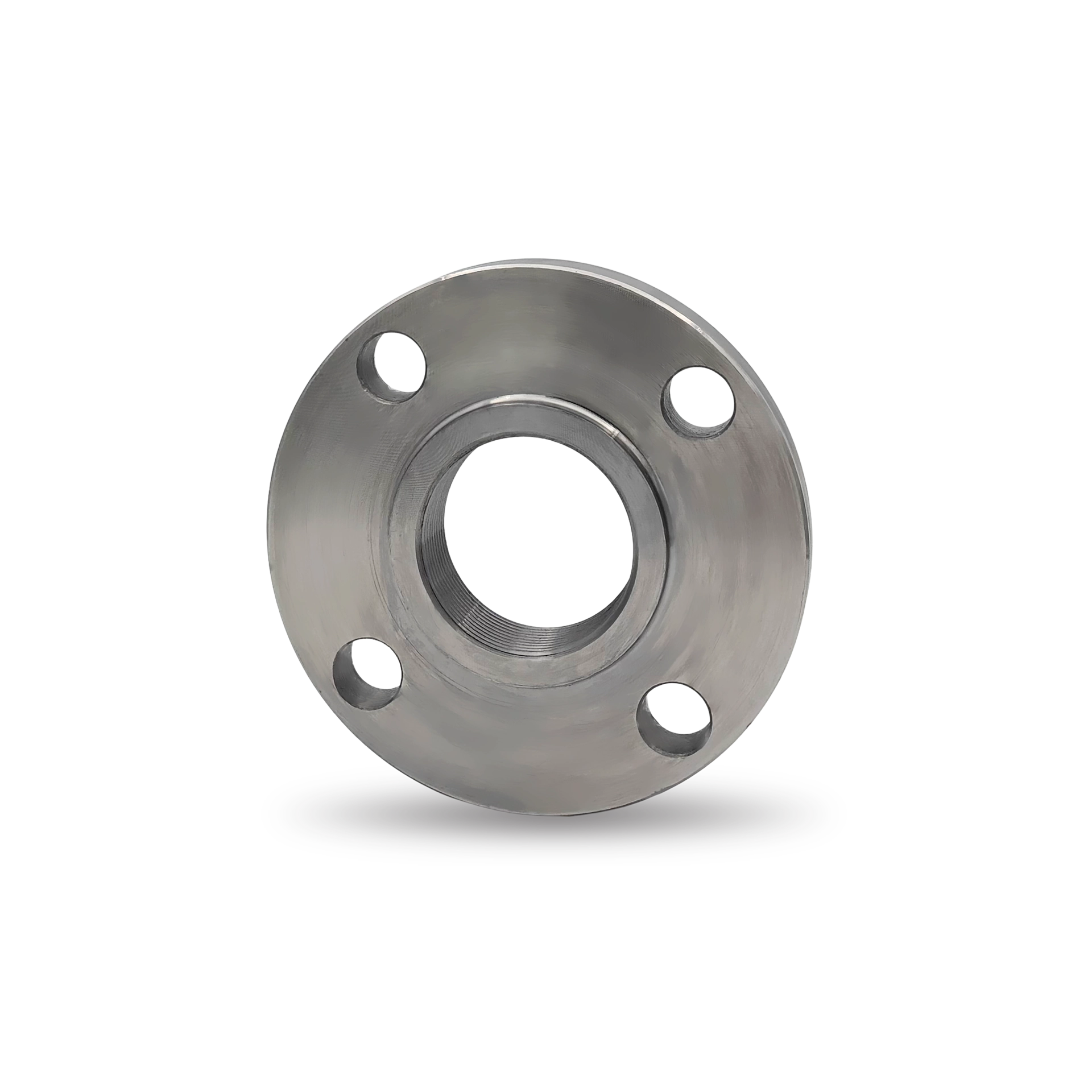
Threaded
THREADED Flange
The TH flange (threaded flange) according to ANSI / ASME B16.5 standards is a type of flange featuring internal or external threading that allows it to be screwed onto pipes or other components. They are mainly used in low-pressure and low-temperature systems, where conditions do not require the strength of welding.
Characteristics of the TH flange (threaded flange):
- ANSI threaded flanges are classified into pressure classes such as Class 150, Class 300, Class 600, and others, which indicate their pressure resistance capacity. The selection of the class depends on the operating pressure of the system in which they are used;
- Easy installation: they do not require welding, making them easy to install in environments where welding is not feasible;
- Disassembly capability: threaded flanges can be removed without damaging the material, facilitating maintenance or component replacement;
- Suitable for low-pressure systems: ideal for applications where high pressure is not required, such as water, gas, and other non-aggressive fluid piping systems.

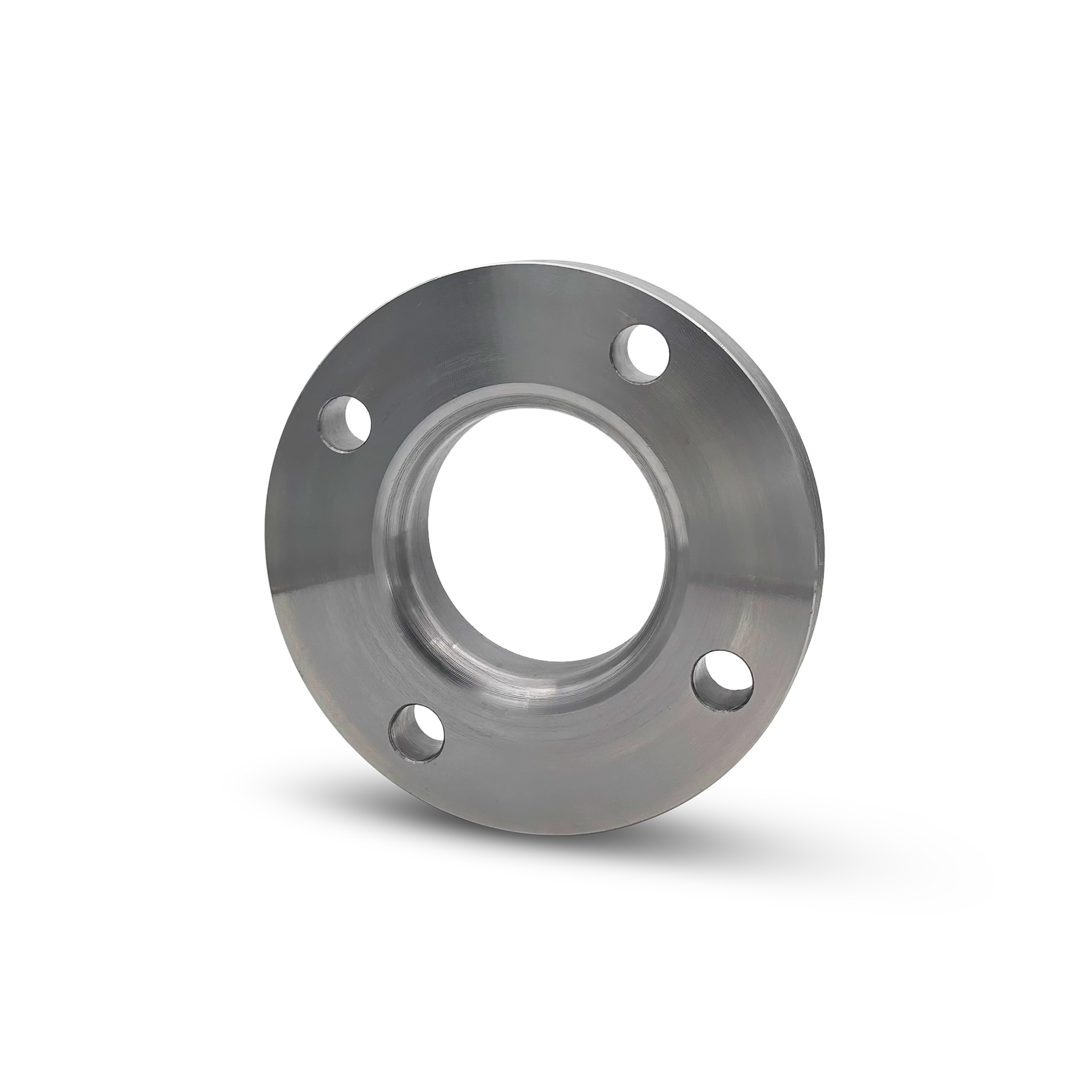
Lap Joint
LAP JOINT Flange (LJ)
The LJ flange (Lap Joint) according to ANSI / ASME B16.5 standards is a loose flange designed to be used in combination with a stub end. It is not welded directly to the pipe, but slides over the stub end and can rotate freely, allowing easy installation and precise alignment of the bolt holes.
This design makes it particularly suitable for installations in confined spaces and for systems requiring frequent maintenance operations.
The flange itself does not provide sealing, which is instead ensured by the stub end surface, while the flange acts as the clamping element.
Characteristics of the lj flange (lap joint):
- Use in combination with stub ends compliant with ASME standards;
- Easier alignment during installation;
- Available in various materials and ANSI pressure classes (150, 300, 600…);
- Quick assembly thanks to the free rotation of the flange;
- No stress on the piping, ideal for sensitive materials or those difficult to weld;
- Easy maintenance; the flange can be removed without intervening on the line.
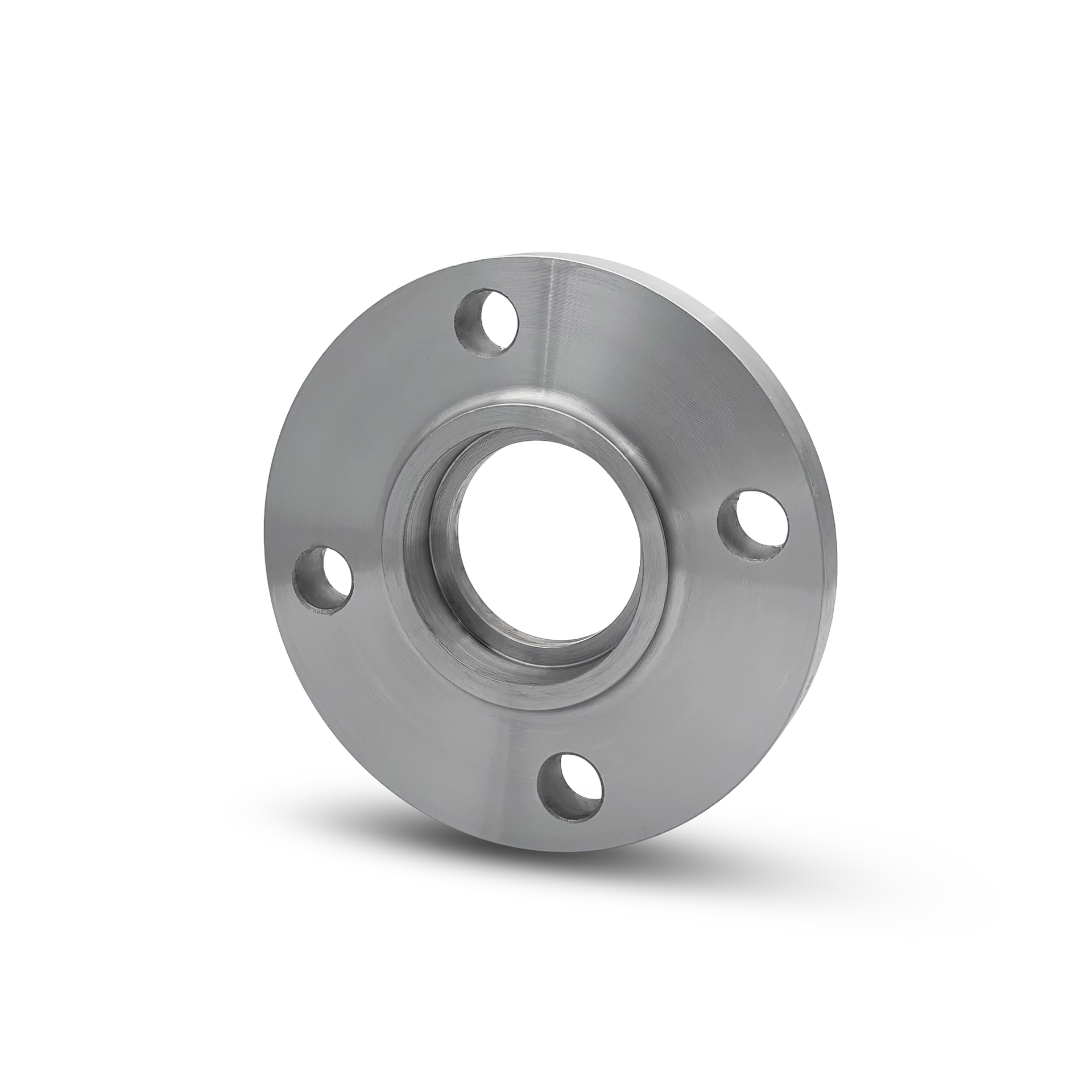
Socket Welding
SOCKET WELDING Flange (SW)
The SW flange (Socket Weld flange) according to ANSI / ASME B16.5 standards has specific characteristics that make it suitable for certain applications, especially in high-pressure conditions and for relatively small pipe diameters.
Characteristics of the SW flange (Socket Weld):
- Socket-type flange for socket weld connection;
- The pipe is inserted into a recessed socket (counterbore) and welded on the outside of the joint;
- Sealing is ensured by an external circumferential weld;
- Typical applications include high-pressure lines, chemical, petrochemical, and marine systems;
- Higher fatigue resistance compared to threaded flanges;
- Requires less machining than a Welding Neck flange;
- Ideal for small to medium diameters;
- Not suitable for repeated thermal cycles (the weld bead may create areas prone to cracking);
- Requires an internal gap (typically 1.6 mm) between the pipe and the bottom of the socket to allow for thermal expansion.
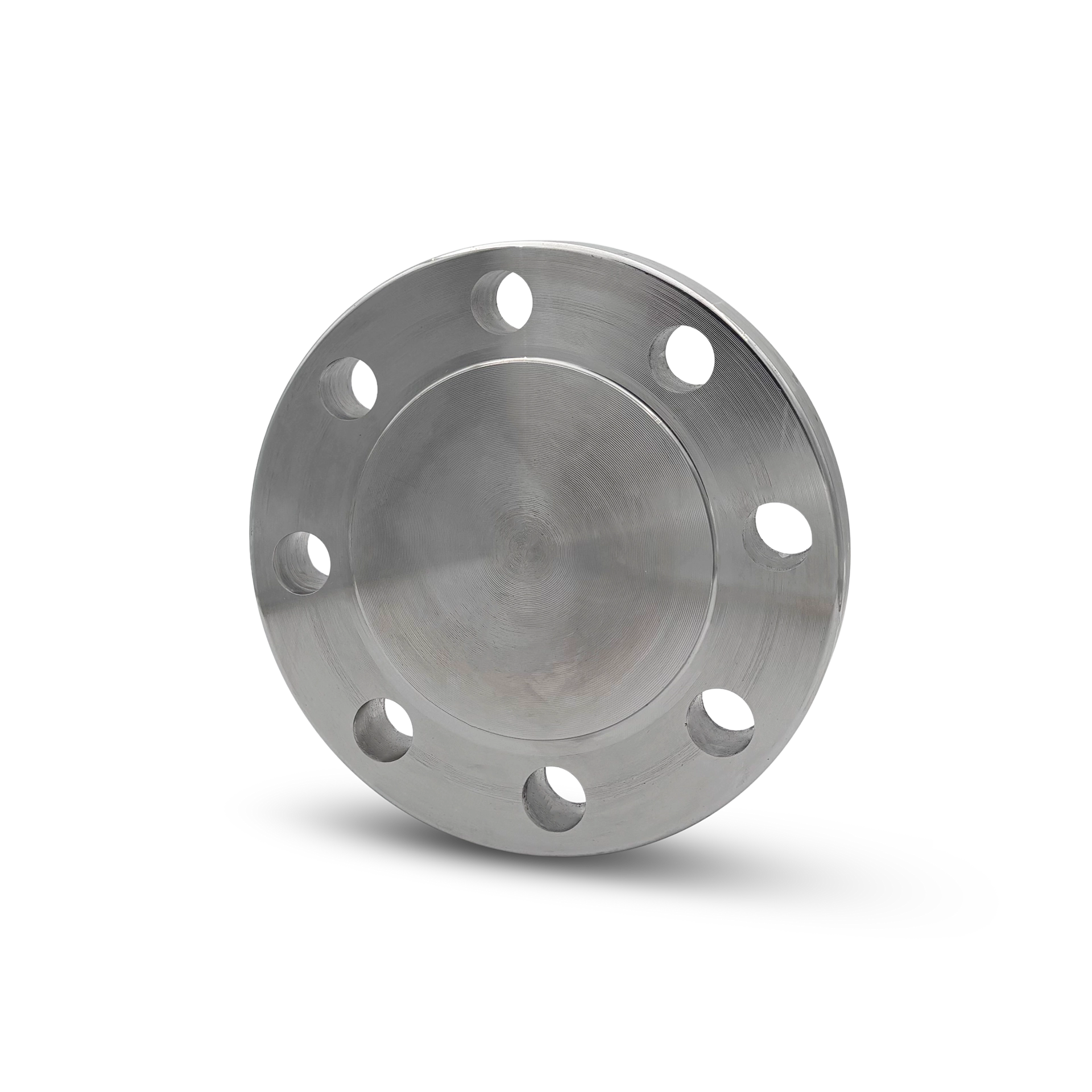
Blind
Blind Flange (BL)
BL (Blind) flanges according to ANSI/ASME standards (in particular ASME B16.5) are blind flanges, meaning they are used to close the end of a pipe, a fitting, or a valve.
They have no central bore and are used to block the flow of fluid.
Characteristics of the BL flange (Blind Flange):
- “BL” is the abbreviation for Blind, meaning blind flange;
- Used to close the end of a pipe, a valve, or an opening in a vessel;
- It has no central bore, therefore it does not allow fluid to pass;
- Easy installation and removal for maintenance;
- Ensures sealing even at high pressures;
- Can be modified to accommodate vent valves or instruments;
- Without a central bore, it can be drilled later for inspections or venting.
Welding neck
WELDIN NECK Flange (WN)
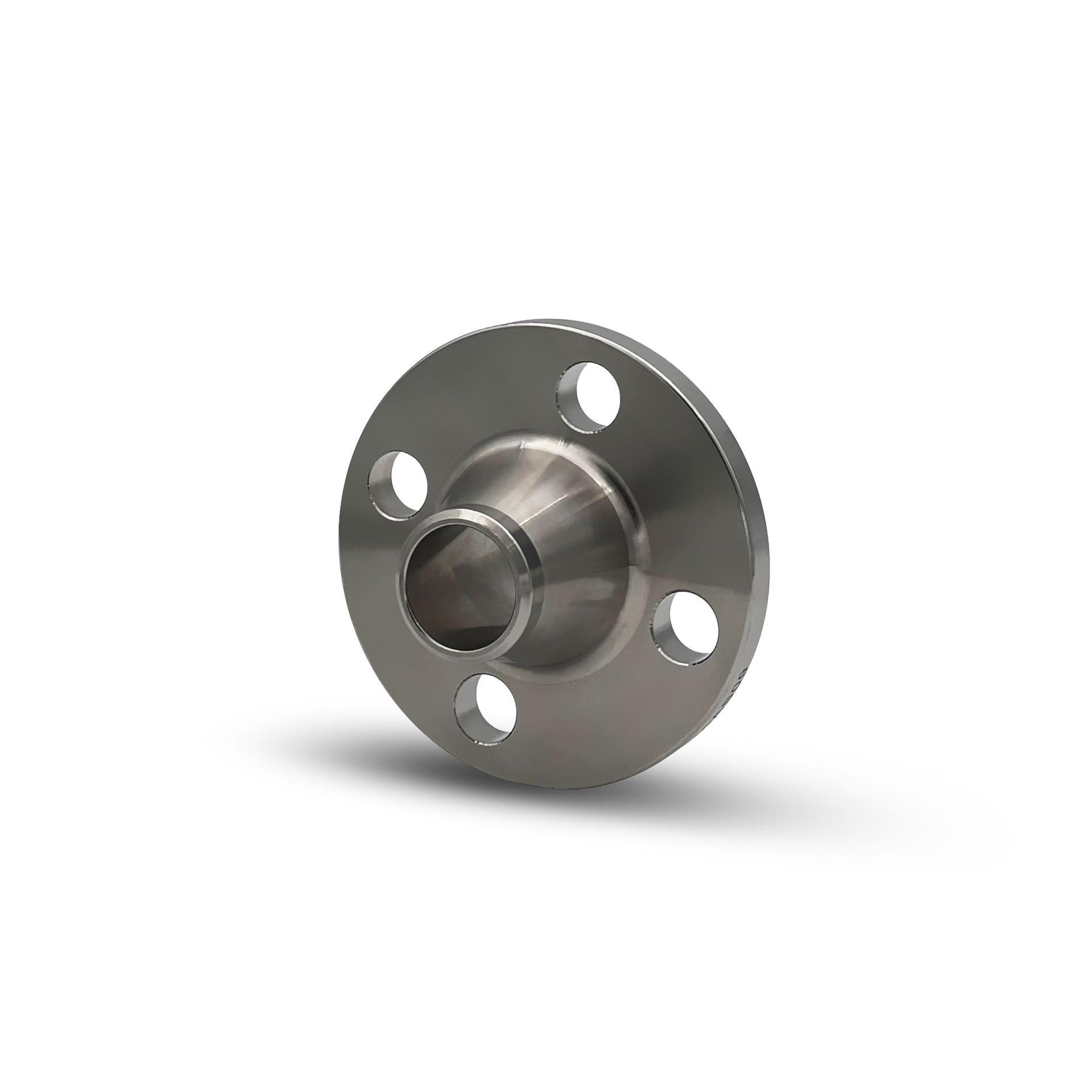
The WN flange according to ANSI (American National Standards Institute) standards is known as a Welding Neck flange (flange with a welding neck).
It is one of the most common and widely used types of flanges for high-pressure and high-temperature applications.
Characteristics of the WN Flange (Welding Neck):
- Tapered neck designed for butt welding directly to the pipe;
- High mechanical strength suitable for severe conditions;
- Stress reduction: thanks to the neck shape, which allows for optimal stress distribution;
- Commonly used in petrochemical plants, power plants, and high-pressure systems.
Slip On
SLIP ON Flange(SO)
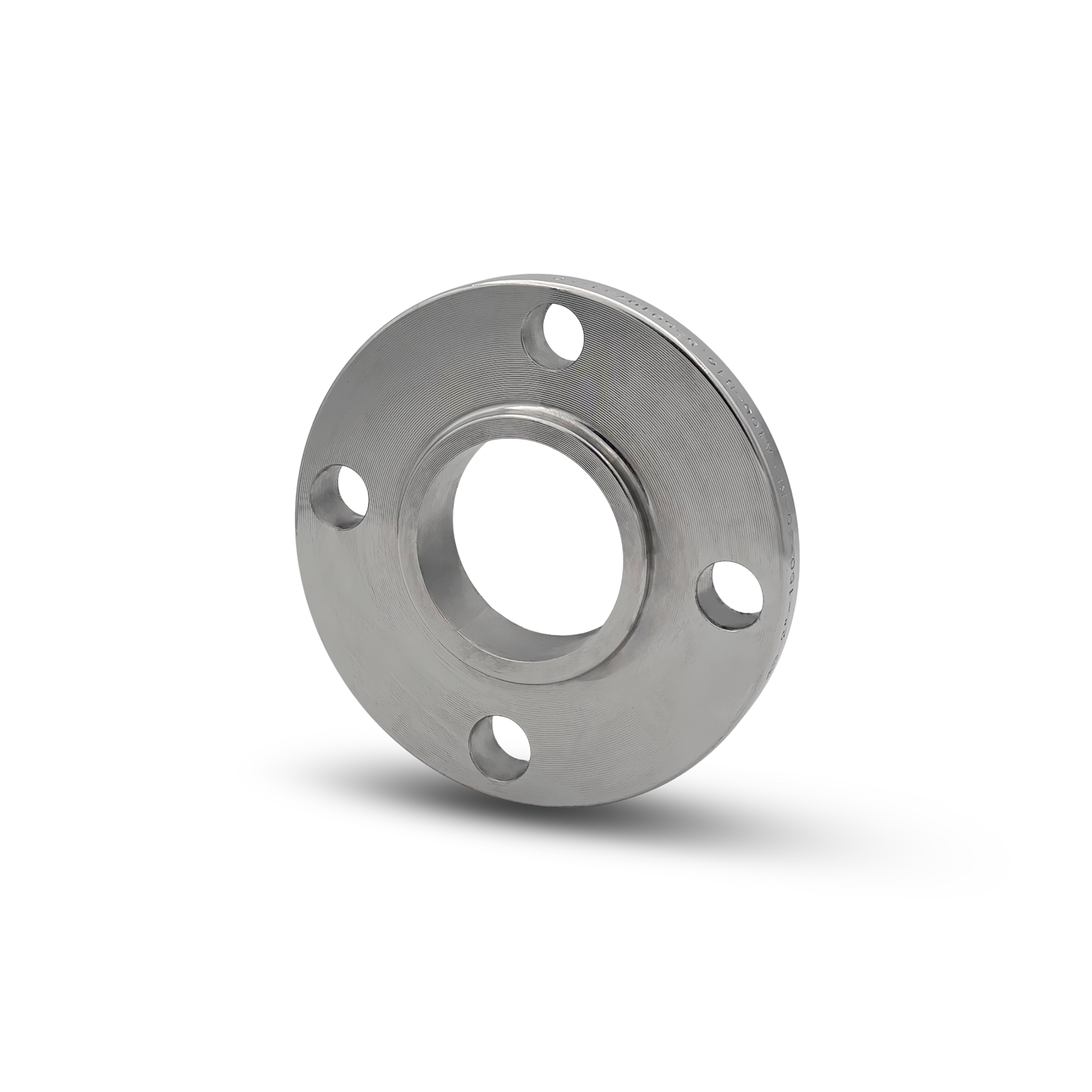
The “Slip-On” flange according to ANSI (American National Standards Institute) standards is a type of flange widely used in piping systems to connect pipe sections or valves. The Slip-On flange slides over the pipe (hence the name “slip-on”) and is then welded both internally and externally to ensure a good seal.
Characteristics of the SO flange (Slip On):
- Internal fillet weld;
- External reinforcement weld;
- Easier to align compared to the Welding Neck;
- Lower production costs;
- Suitable for moderate pressures and temperatures.